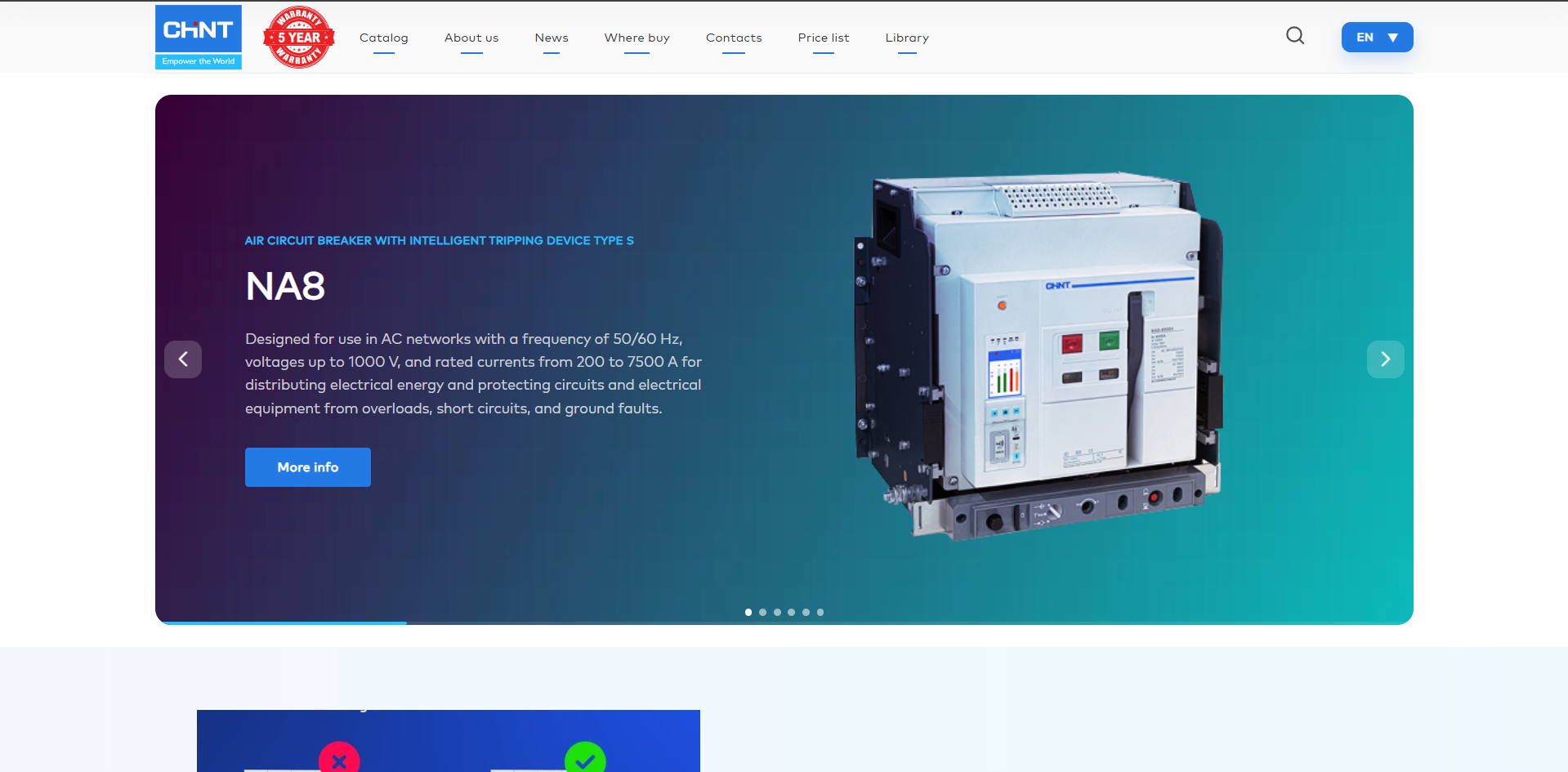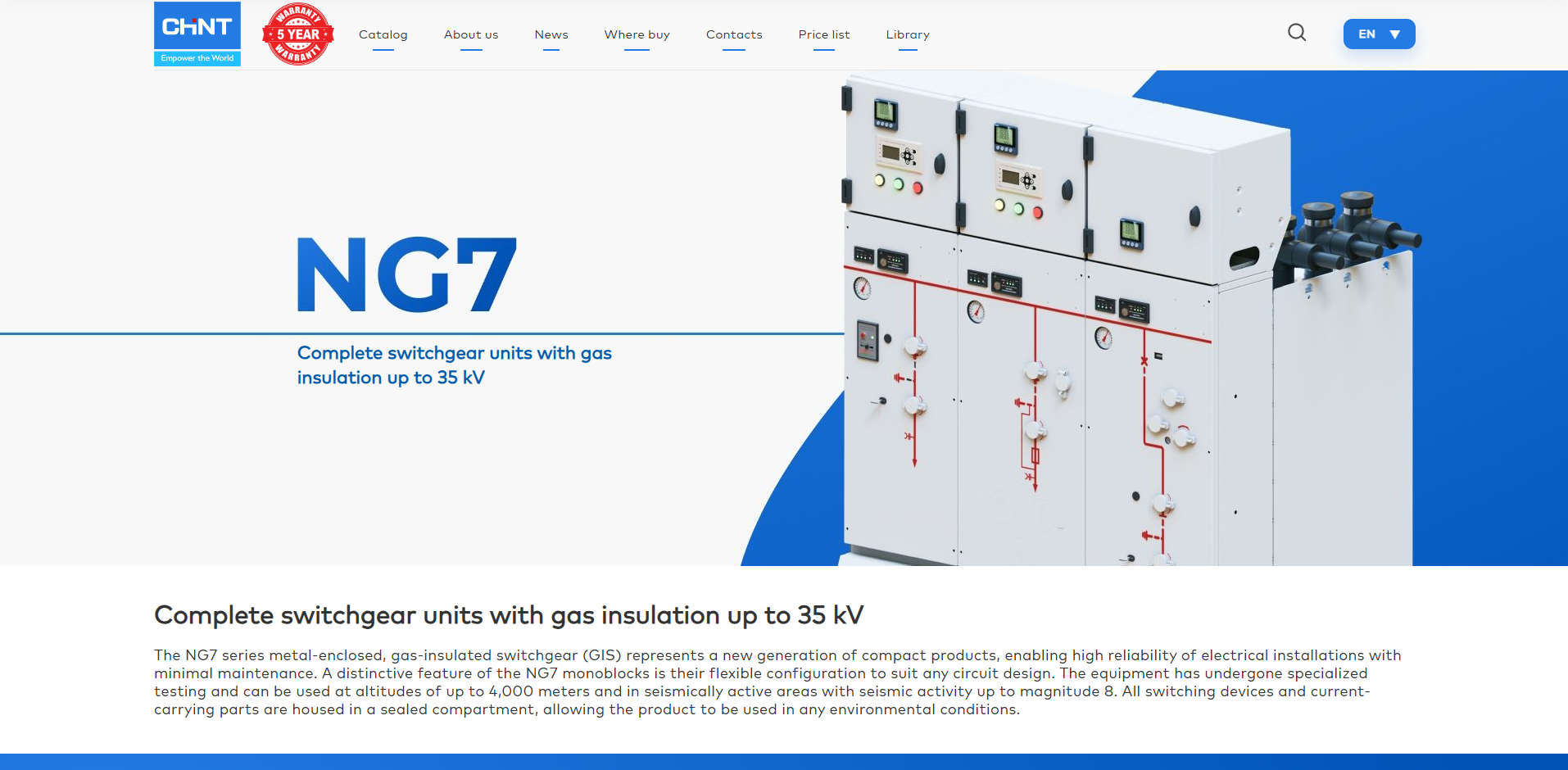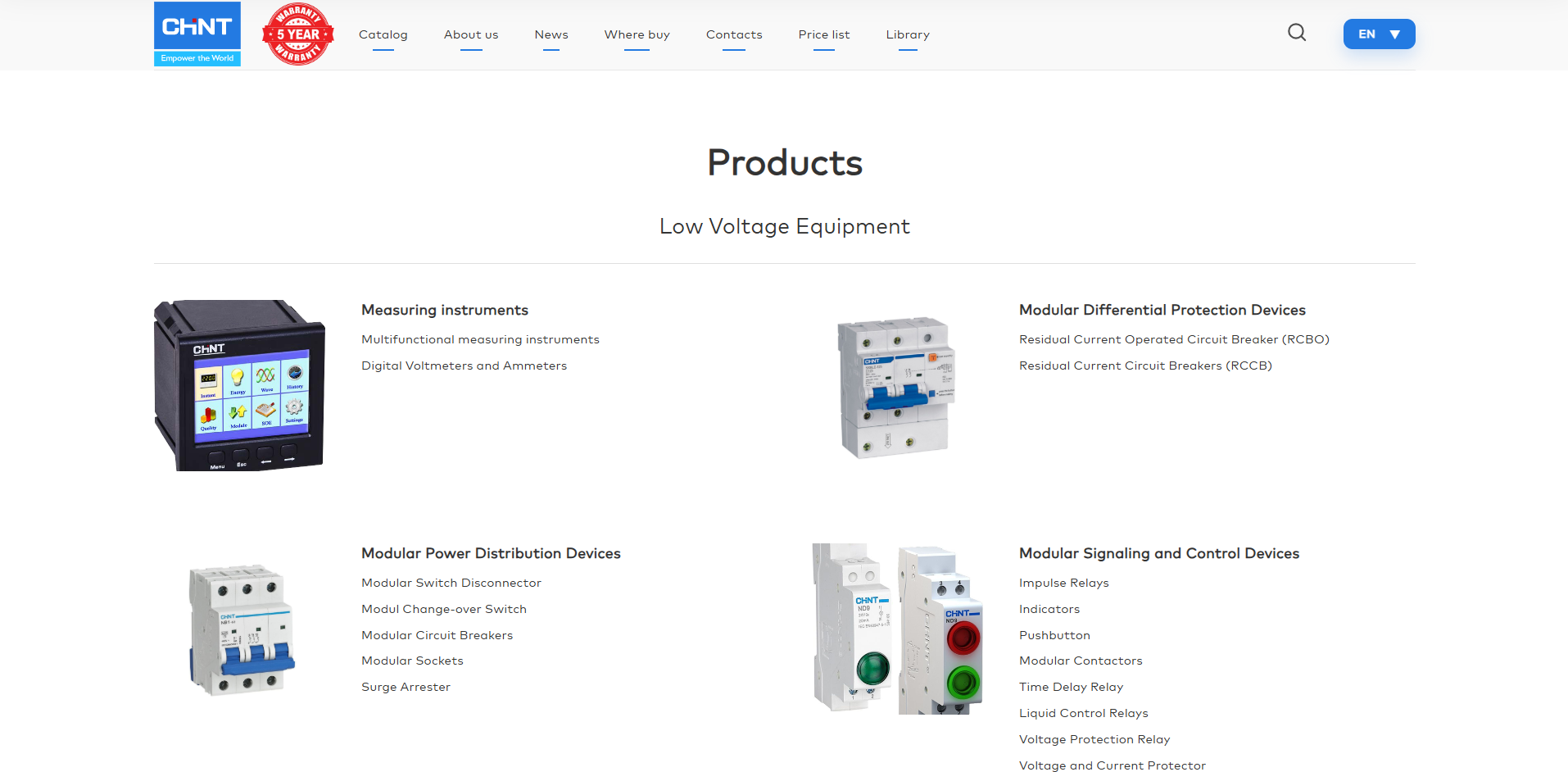
CHINT Caucasus — Corporate Platform for a Global Brand
CHINT is a global manufacturer of intelligent electrical and energy equipment, operating in more than 140 countries. CHINT Caucasus represents the brand across the regional market.
Representing a global brand regionally is a specific kind of problem. You are not free to invent — the parent brand has standards, and looking like a small local reseller undermines the thing you are representing. But you are also not head office. You have your own market, your own customers, and your own products to present.
The problem
Two constraints pulling in opposite directions.
It has to look like CHINT. A regional site that feels visibly cheaper than the global brand does active damage. An industrial buyer comparing suppliers reads inconsistency as a warning.
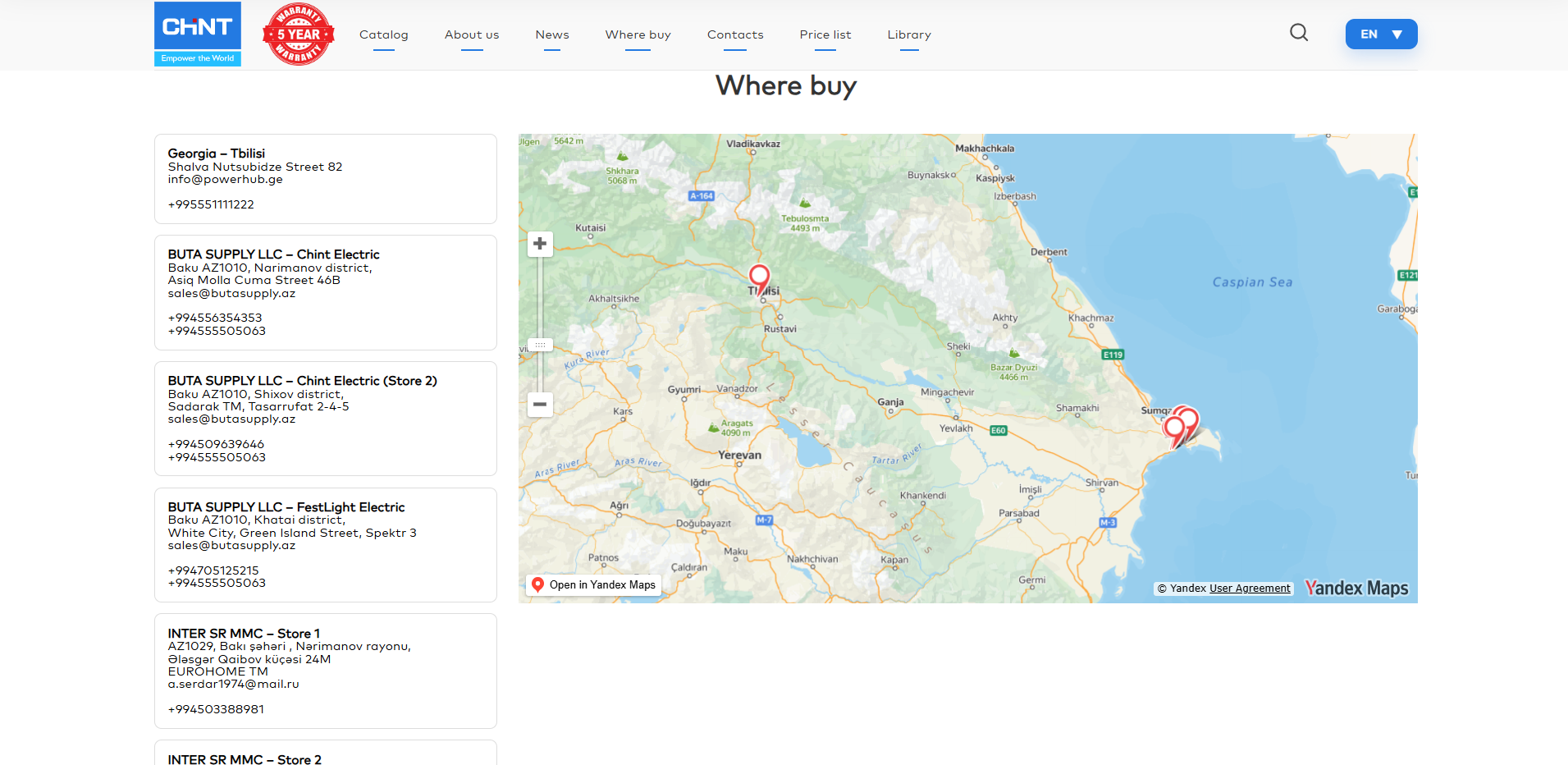
It has to work for this market. Regional products, regional customers, regional operations — not a translated copy of a global site.
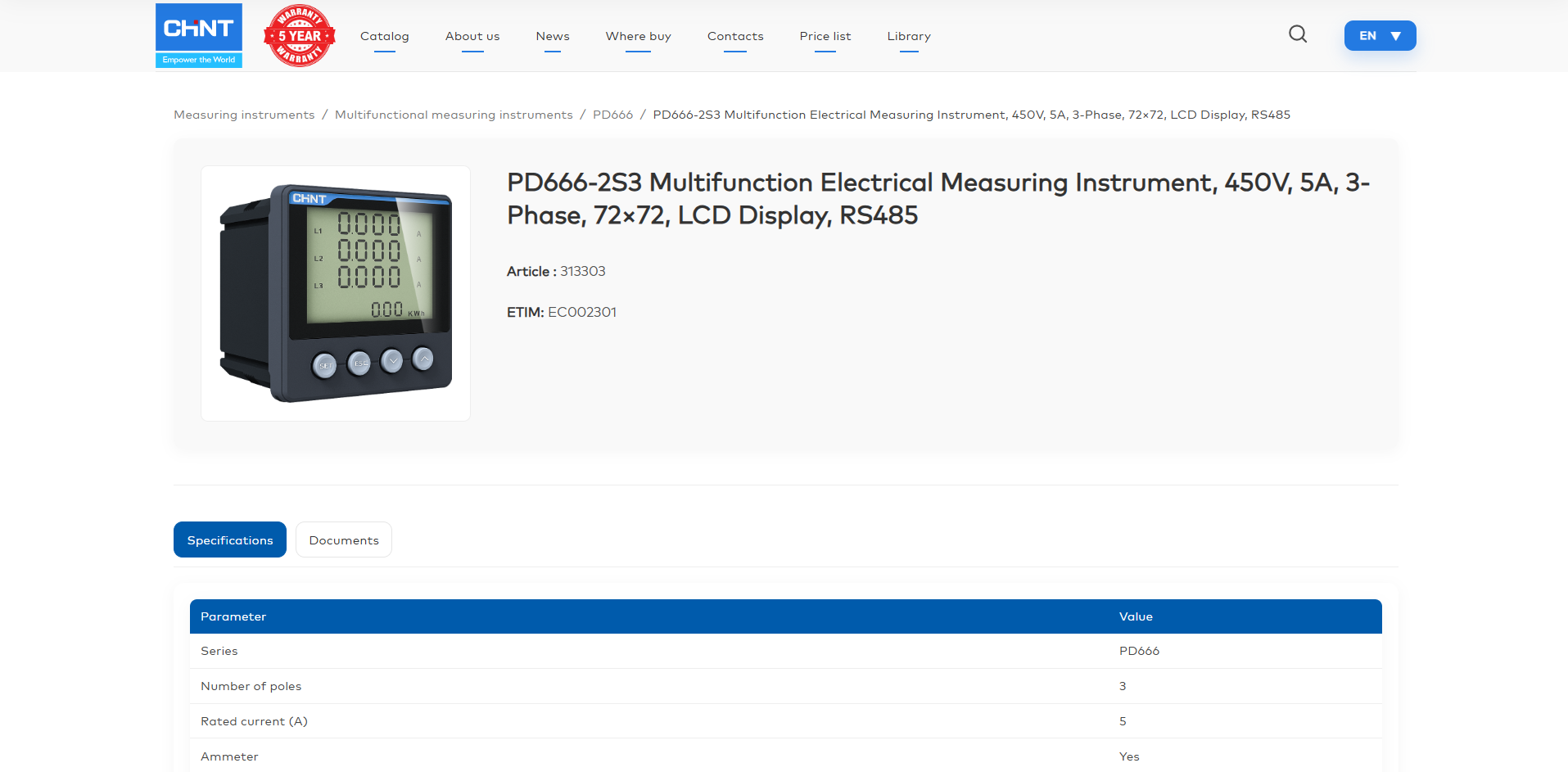
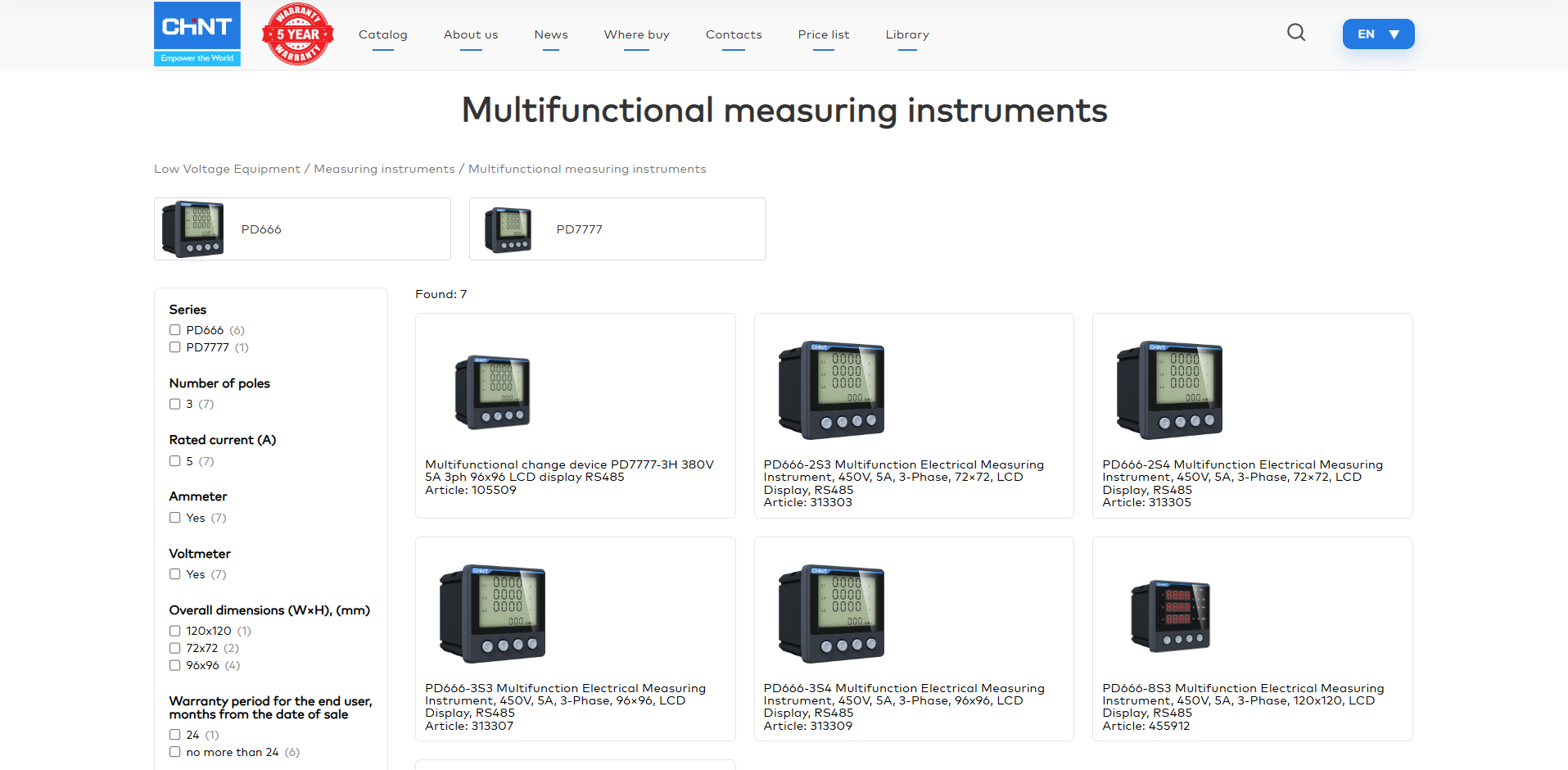
And behind both: product data lives somewhere else. An industrial catalogue is not something anyone should be retyping by hand into a website. It changes, it is large, and every manual step is a future error.
What we built
The site itself, from scratch. Architecture, database structure, and backend logic designed around content and product management rather than adapted from a template that was built for someone else's business.
Automated synchronisation with the partner platform. Product data flows in through an API integration rather than being copied by a person. Nobody maintains a spreadsheet. The site reflects the source, and it reflects it without anyone remembering to make it.
Infrastructure built for reliability. VPS configured and tuned, web server set up properly, environment secured. Automated weekly backups, so a bad day is an inconvenience rather than an event.
Structure that scales. The catalogue grows. The system was designed for the version of the business that exists in three years, not just the one that signed off the design.
Why the integration mattered most
The visible part of this project is a corporate website. The part that determines whether it works is the synchronisation.
Manual product data on an industrial catalogue fails in a predictable sequence: it starts accurate, someone updates the source and not the site, a customer finds a discrepancy, and from that point nobody trusts the site — including internal staff, who start telling customers to call instead. The website becomes a brochure with a phone number, and the entire investment is wasted.
Automating it removes the human step that fails. Not because people are careless, but because "remember to update the website every time anything changes" is not a process — it is a hope.
Result
A stable, scalable corporate platform that represents a global brand at the standard the brand requires, presents a regional catalogue that stays accurate without manual work, and runs on infrastructure configured to survive without constant attention.
Built by DAKER — architecture, development, infrastructure, deployment.